


What Is an Old European Cut Diamond? Key Features & Charm
by Manish on Jul 24 2025
If you’ve been browsing vintage engagement rings or exploring antique-inspired designs, you’ve probably come across the term old European cut diamond. These diamonds are more than just beautiful—they’re a piece of history. But exactly what is a European cut diamond, and what makes it stand out from modern cuts?
In this guide, we’re taking a closer look at the European cut diamond—its origin, defining traits, and why so many people are drawn to its timeless charm.
Browse our collection of old European cut diamonds here.
The old European cut diamond is a diamond shape that was most commonly cut between the 1890s and 1930s. This was a time when every diamond was cut by hand, with no machines or modern software—just the trained eyes and skilled hands of expert craftsmen. These diamonds were especially popular during the Edwardian and Art Deco eras and are now considered the vintage predecessor to today’s round brilliant cut.
Unlike modern diamonds, which are designed to sparkle under bright, artificial light, old European-cut diamonds were made to glow under candlelight. Their beauty is softer, warmer, and far more romantic.
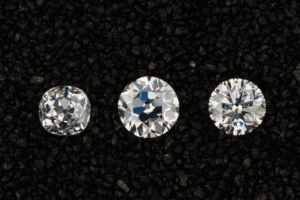
There’s something deeply special about the way old European cut diamonds were made. Each one is slightly different because they were cut by hand—no two are the same. That imperfect, human touch gives them a kind of soul you don’t often find in today’s machine-cut stones.
These diamonds were designed to retain more of the original rough diamond, so they’re often a little deeper than modern cuts. And instead of being cut purely for sparkle, they were shaped to shine gently in the dim glow of a candlelit room. That’s part of what gives them their old-world magic.
If you’re wondering how to recognise an old European cut diamond, here are a few key things to look for:
Each one has its own personality, and that uniqueness is a big part of why they’re so beloved by vintage lovers and collectors.
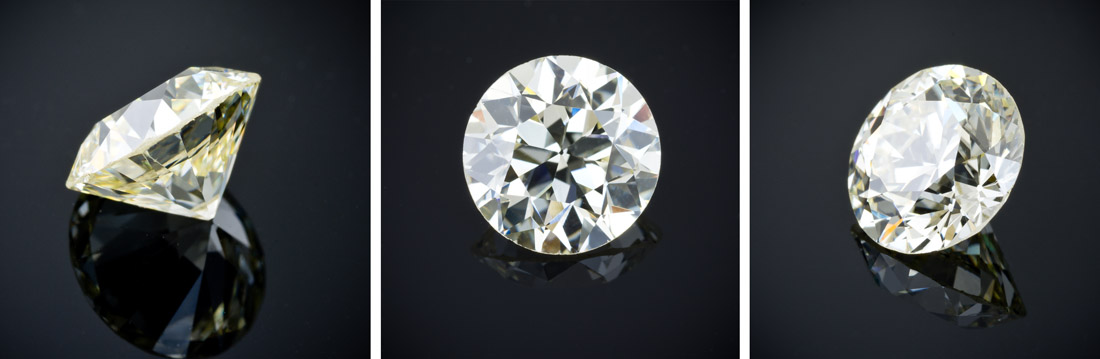
One of the easiest ways to spot an old European cut diamond is to look for the small dark circle at the centre when you view the stone from the top. That circle is caused by the large culet—something you won’t usually see in modern diamonds, which tend to come to a sharp point at the bottom.
You’ll also notice that the sparkle feels different. It’s not as flashy or fiery as a modern brilliant cut. Instead, it’s more muted—almost like a soft glow rather than a twinkle. The table is smaller, the crown is taller, and the overall shape may not be a perfect circle.
When compared to an old mine cut (which is more cushion-shaped) or a modern round brilliant (which is highly symmetrical and engineered for sparkle), the European cut diamond sits right in the middle. Rounder than old mine cuts, but more rustic than modern ones—it’s a perfect blend of antique charm and elegance.
To the untrained eye, the old European cut diamond might look similar to a round brilliant, but they’re quite different in terms of structure and light performance.
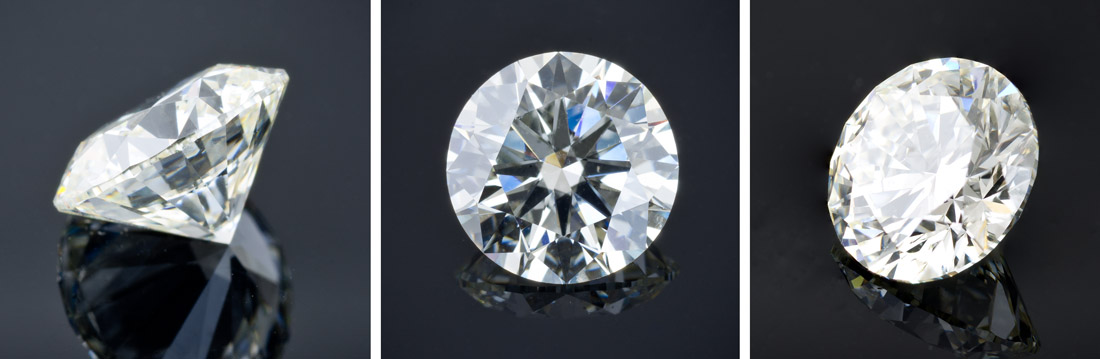
Modern round brilliant diamonds are precision-engineered to maximise brilliance, fire, and sparkle. Every angle, every facet is calculated to reflect the most light. They’re bright, sharp, and undeniably dazzling.
But the European cut diamond plays by different rules. It doesn’t try to be perfect. Its facets are larger, its light return is softer, and it was crafted for beauty in low light, not showroom shine. If you love the idea of a diamond that tells a story—and doesn’t look like everyone else’s—the old European cut diamond may be exactly what you’re looking for.
Old European Cut:
Modern Round Brilliant Cut:
In short, yes—many old European cut diamonds are considered quite valuable, especially as they become increasingly rare. Since this style of cutting isn’t used much today, each one is a small piece of history.
Their value still depends on the same factors as modern diamonds: the 4 Cs—cut, colour, clarity, and carat weight. That said, their cut may not always earn the highest grades by today’s standards because they weren’t made to modern specifications. But to collectors and vintage jewelry lovers, their uniqueness and historical significance often outweigh the technical grading.
If you have or are considering an old European cut diamond, it’s worth getting it professionally appraised to understand its full value.
There’s something undeniably special about the old European cut diamond. It’s not just about beauty—it’s about history, character, and craftsmanship. These diamonds don’t sparkle in the same way modern ones do, and that’s exactly the point. They shine with warmth, personality, and the kind of soul that only comes from being shaped by hand.
Whether you’re drawn to their vintage appeal, their softer glow, or their uniqueness, one thing’s for sure—these diamonds carry a timeless charm that’s hard to replicate. In a world of perfection and polish, the European cut diamond is a beautiful reminder that imperfection can be its kind of brilliance.
Discover your Old European Cut diamond.
In this guide, we’re taking a closer look at the European cut diamond—its origin, defining traits, and why so many people are drawn to its timeless charm.
Browse our collection of old European cut diamonds here.
What Is an Old European Cut Diamond?
The old European cut diamond is a diamond shape that was most commonly cut between the 1890s and 1930s. This was a time when every diamond was cut by hand, with no machines or modern software—just the trained eyes and skilled hands of expert craftsmen. These diamonds were especially popular during the Edwardian and Art Deco eras and are now considered the vintage predecessor to today’s round brilliant cut.
Unlike modern diamonds, which are designed to sparkle under bright, artificial light, old European-cut diamonds were made to glow under candlelight. Their beauty is softer, warmer, and far more romantic.
A Historical Cut with Lasting Beauty
There’s something deeply special about the way old European cut diamonds were made. Each one is slightly different because they were cut by hand—no two are the same. That imperfect, human touch gives them a kind of soul you don’t often find in today’s machine-cut stones.
These diamonds were designed to retain more of the original rough diamond, so they’re often a little deeper than modern cuts. And instead of being cut purely for sparkle, they were shaped to shine gently in the dim glow of a candlelit room. That’s part of what gives them their old-world magic.
Key Features of an Old European Cut Diamond
If you’re wondering how to recognise an old European cut diamond, here are a few key things to look for:
- 58 facets: Like the modern round cut, they usually have 58 facets, but they’re broader and more geometric. This gives the diamond a chunkier, more dramatic sparkle.
- Large culet: The culet is the flat facet at the very bottom of the diamond. In old European cut diamonds, it’s often quite large and visible through the centre of the stone.
- Small table: The flat top part of the diamond (called the table) is smaller, which affects how the light moves through the stone.
- High crown: These diamonds have a taller profile thanks to their elevated crown.
- Unique symmetry: Because they were cut by hand, many of these diamonds aren’t perfectly round—but that’s part of their charm.
Each one has its own personality, and that uniqueness is a big part of why they’re so beloved by vintage lovers and collectors.
How to Identify an Old European Cut Diamond
One of the easiest ways to spot an old European cut diamond is to look for the small dark circle at the centre when you view the stone from the top. That circle is caused by the large culet—something you won’t usually see in modern diamonds, which tend to come to a sharp point at the bottom.
You’ll also notice that the sparkle feels different. It’s not as flashy or fiery as a modern brilliant cut. Instead, it’s more muted—almost like a soft glow rather than a twinkle. The table is smaller, the crown is taller, and the overall shape may not be a perfect circle.
When compared to an old mine cut (which is more cushion-shaped) or a modern round brilliant (which is highly symmetrical and engineered for sparkle), the European cut diamond sits right in the middle. Rounder than old mine cuts, but more rustic than modern ones—it’s a perfect blend of antique charm and elegance.
Old European Cut vs. Modern Round Brilliant
To the untrained eye, the old European cut diamond might look similar to a round brilliant, but they’re quite different in terms of structure and light performance.
Modern round brilliant diamonds are precision-engineered to maximise brilliance, fire, and sparkle. Every angle, every facet is calculated to reflect the most light. They’re bright, sharp, and undeniably dazzling.
But the European cut diamond plays by different rules. It doesn’t try to be perfect. Its facets are larger, its light return is softer, and it was crafted for beauty in low light, not showroom shine. If you love the idea of a diamond that tells a story—and doesn’t look like everyone else’s—the old European cut diamond may be exactly what you’re looking for.
Old European Cut:
Modern Round Brilliant Cut:
Are Old European Cut Diamonds Valuable?
In short, yes—many old European cut diamonds are considered quite valuable, especially as they become increasingly rare. Since this style of cutting isn’t used much today, each one is a small piece of history.
Their value still depends on the same factors as modern diamonds: the 4 Cs—cut, colour, clarity, and carat weight. That said, their cut may not always earn the highest grades by today’s standards because they weren’t made to modern specifications. But to collectors and vintage jewelry lovers, their uniqueness and historical significance often outweigh the technical grading.
If you have or are considering an old European cut diamond, it’s worth getting it professionally appraised to understand its full value.
Conclusion
There’s something undeniably special about the old European cut diamond. It’s not just about beauty—it’s about history, character, and craftsmanship. These diamonds don’t sparkle in the same way modern ones do, and that’s exactly the point. They shine with warmth, personality, and the kind of soul that only comes from being shaped by hand.
Whether you’re drawn to their vintage appeal, their softer glow, or their uniqueness, one thing’s for sure—these diamonds carry a timeless charm that’s hard to replicate. In a world of perfection and polish, the European cut diamond is a beautiful reminder that imperfection can be its kind of brilliance.
Discover your Old European Cut diamond.
